

I've already written three articles about the Twins' trade deadline, analyzing their A.J. Minter deal with the Mets, their Dean Kremer deal with the Orioles, and their Jeff Hoffman deal with the Blue Jays, the latter of which also included big-picture impressions of first-year general manager Jeremy Zoll's decision-making.
And yet inevitably, there were also stray thoughts that wouldn't have fit smoothly into those articles, plus some other stuff, that I wanted to share after having time to let the deadline dust settle a bit. This is me emptying the notebook of anything deadline related still bouncing around in my sleep-deprived brain.
Grading the deadline
I'm not a huge fan of grading individual trades, or overall deadlines, preferring to let people pass their own judgment after reading my analysis. With that said, and acknowledging that I'm a tough grader, I'd probably give the Twins something in the B-minus range for adding Hoffman, Minter, and Kremer.
I think the front office did well to address the three biggest needs, but I'd liked to have aimed higher than Kremer if they were willing to move prospect Jhomnardo Reyes for a starter. They put a lot of value on the control of Kremer in 2027, but I view it as more marginal given he'll likely have a salary of at least $7-8 million.
Seeing a back-end starter's 2027 control as meh value, they may have been better off targeting a two-month rental with a higher ceiling. For example, the Blue Jays dealt Kevin Gausman to the Cubs for a surprisingly modest return. It would have required taking on $5 million more than Kremer, but I'd have preferred Gausman.
And while keeping Ryan Jeffers and Trevor Larnach is more helpful to the lineup than subtracting them, the Twins might regret not adding some level of bat with Alex Jackson and Tristan Gray as half the bench. In particular, my years-long plea for the Twins to add a right-handed-hitting corner outfielder remains unfulfilled.
 Aaron Gleeman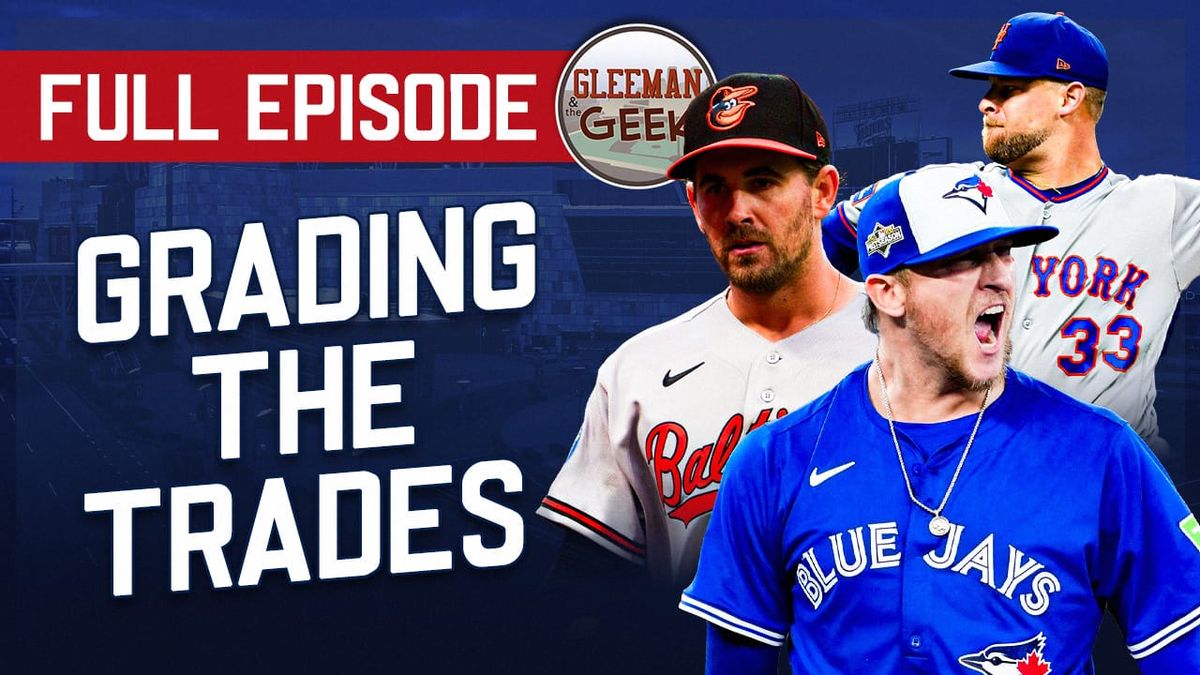
Larnach-for-Abreu nixed
Plugged-in reporters from both sides of the aisle confirmed the Twins had a deal in place, days before the deadline, sending Larnach to Houston for reliever Bryan Abreu. Astros owner Jim Crane nixed it, so they pivoted to adding a different left-handed-hitting outfielder, getting Daulton Varsho from the Blue Jays.
Multiple other teams pursued Larnach, including repeat interest from San Diego, but the Twins decided to keep the lineup intact. Larnach going to Houston would have meant Abreu, not Hoffman, being the big right-handed bullpen add. They're both proven upper-echelon relievers who got back on track after rough Aprils.
But there's a key difference: Abreu is an impending free agent. It makes sense the Twins preferred giving up Larnach, even to rent Abreu, instead of losing prospect Dasan Hill to add Hoffman through 2027. Larnach has hit very well, but they have in-house replacement options and he may not be in their 2027 plans anyway.
It's also possible the Twins learned enough in deadline talks to believe Larnach's career-year has increased his trade market to the level they can count on getting something decent in return for him this offseason. If that's the case, keeping him now to help the lineup, and trading him later to get some future value, is ideal.
Jeffers and the QO
Relative to Larnach, the Twins were in a trickier situation with Jeffers' impending free agency. They'd obviously prefer to not lose Jeffers for nothing this offseason, and my understanding is that he received strong trade interest during a deadline in which multiple starting catchers were moved for good returns.
On the other hand, any gains the Twins made — to the on-field roster and to the off-field fan morale — from buying pitching help would have been wiped away by selling Jeffers, who is one of the team's best players in the midst of a career-year at a premium defensive position. Victor Caratini, while decent, is a large dropoff.
I think ultimately the Twins made the correct decision to keep Jeffers, but I'd also feel a lot better about the whole situation if I had confidence that the front office would make him the qualifying offer. At this point, it's the only way to stop Jeffers from leaving for nothing as a free agent in three months.
There's risk associated with the qualifying offer, because it's basically a one-year deal worth around $24 million. However, the idea of paying Jeffers a premium for one more season, and avoiding a long-term commitment, is appealing to me. And if he turns it down, the Twins would receive a top-50 draft pick as compensation.